Signs of termites
Room-by-room and outdoor checks from university extension entomologists, with what each sign means and the step it calls for.
The clearest signs of termites are winged swarmers or piles of shed wings indoors and earthen mud tubes on the foundation. Wood that sounds hollow with dried soil in its galleries is another, as are heaps of tiny six-sided pellets. Live termites in a broken tube, or a tube rebuilt within days, confirm an active infestation 12.
In forests, termites are recyclers: they break down dead wood and keep soils porous and fertile 3. They live in every US state except Alaska 2. The same appetite makes subterranean termites the most destructive and economically important pest of wood in the country 2.
They are also hard to see. Colonies live inside soil and wood, so a building has usually been infested for some time before any sign becomes obvious 1.
Maybe you found a pile of wings on a windowsill or a crust of dried mud on the foundation. Now you are trying to work out how worried to be.
But one sign rarely settles it. Flying ants, beetle powder and long-abandoned tubes look alarming too, while some genuine termite signs only prove that termites were there years ago. So which signs mean termites are in the house now?
We matched each sign to what extension entomologists in Mississippi, North Carolina, Florida, Texas and California say it means.
Which signs prove termites are active right now?
Extension guidance separates signs that show termites working today from signs that only show they were once present. Sorting a find into one of three grades tells you whether to book an inspection this week or to keep records and watch.
Grade 1: confirmed activity. Live termites in wood are a sure sign of an active infestation 3. So is a mud tube that termites rebuild within a few days of being broken 1.
Swarmers emerging from walls, floors or ceilings belong here too. A colony needs several years to grow large enough to produce them, so a large indoor emergence means a large colony is feeding on the building 1.
Grade 2: strong evidence, activity unknown. Mud tubes climbing the foundation usually mean the building is infested, even before their activity is tested 1. Galleries holding dried dirt identify termite damage, though the damage may date from an infestation already controlled 1.
Piles of uniform six-sided pellets mean drywood termites 1, although pellets alone cannot show whether the colony is still alive 4.
Grade 3: weak or contextual signs. Swarmers rising from a stump or woodpile 25 feet or more from the foundation are rarely a concern for the house 1. Old tubes dry out and crumble, leaving an etched trace that can stay visible for years as a record of past activity 5.
Swarmers and shed wings: usually the first thing anyone notices
Swarmers, or alates, are the winged reproductive adults that leave a mature colony to mate and found new ones 6. Texas A&M entomologists describe swarmers on windowsills or near indoor lights as the first sign homeowners generally notice 7.
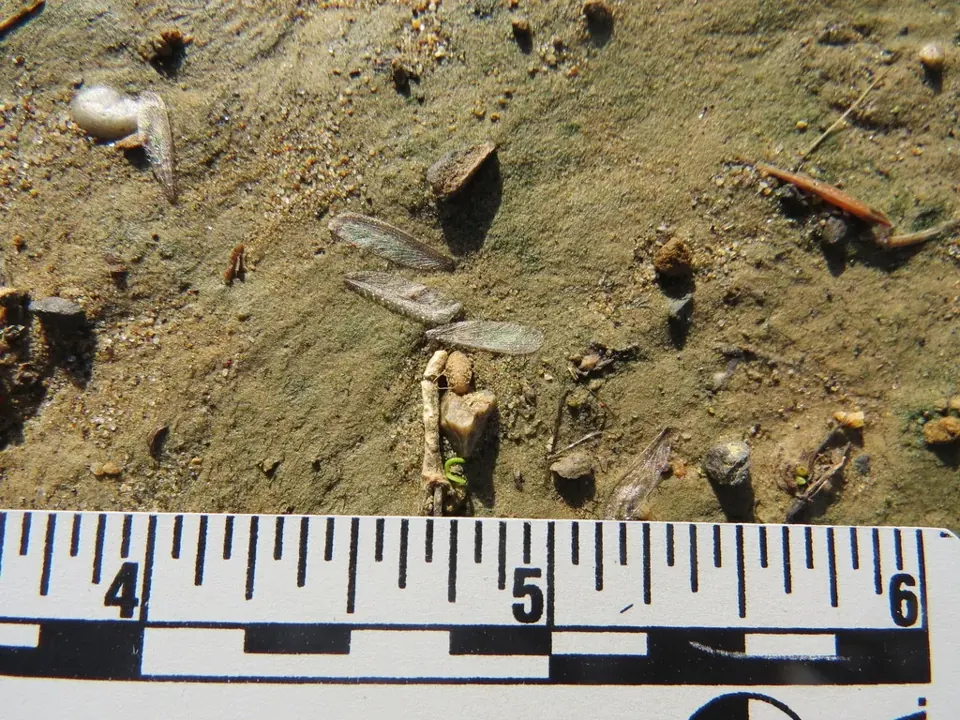
Indoors, people often find only dead swarmers or their wings 6. In Florida, Reticulitermes alates found after indoor flights are usually dead and dried near windows or in sinks and bathtubs, wings still attached 8. Loose wings under doors or on sills mean swarmers emerged inside and could not escape, or emerged close by 2.
Where the swarm happens changes its meaning. When swarming occurs indoors, it usually means an infestation somewhere within the house 5. Swarmers emerging outside but close to the foundation may or may not mean the house is infested. Mississippi State treats them as grounds for a professional inspection 1.
Formosan subterranean termites (Coptotermes formosanus) complicate the rule in heavily infested neighborhoods. Their swarmers are so strongly drawn to lights that a few dozen inside a properly treated house may have flown in from outdoor colonies. Hundreds indicate a current problem, whatever the treatment history 1.
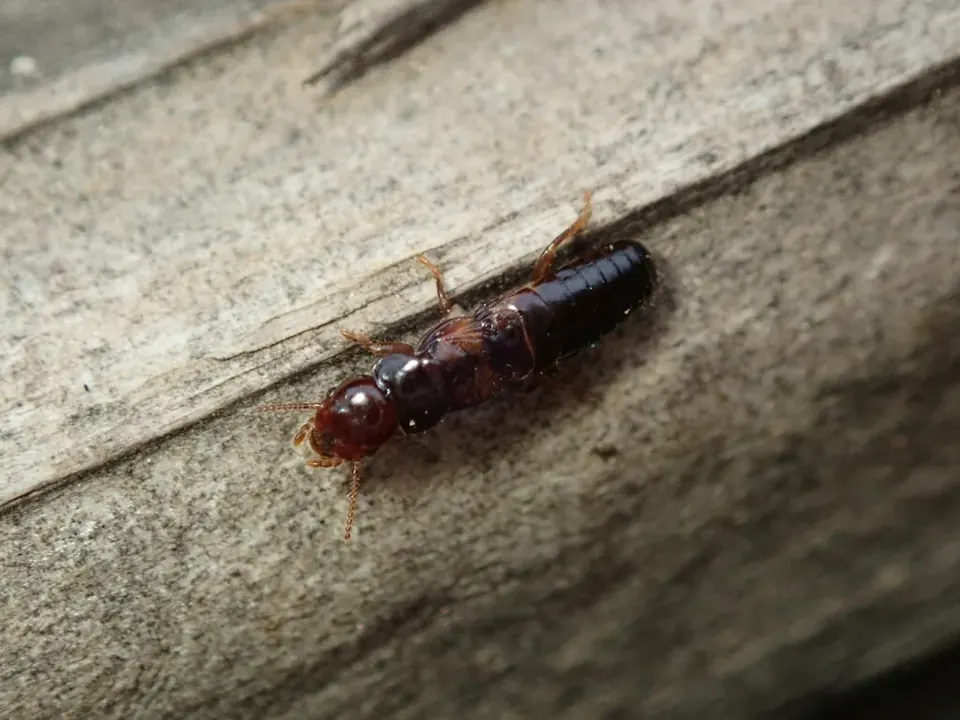
Several ant species swarm in the same months as termites 5. A flying termite is confirmed by straight, beaded antennae, a broad waist and four wings of equal length 6.
Mud tubes on foundations, piers and pipes
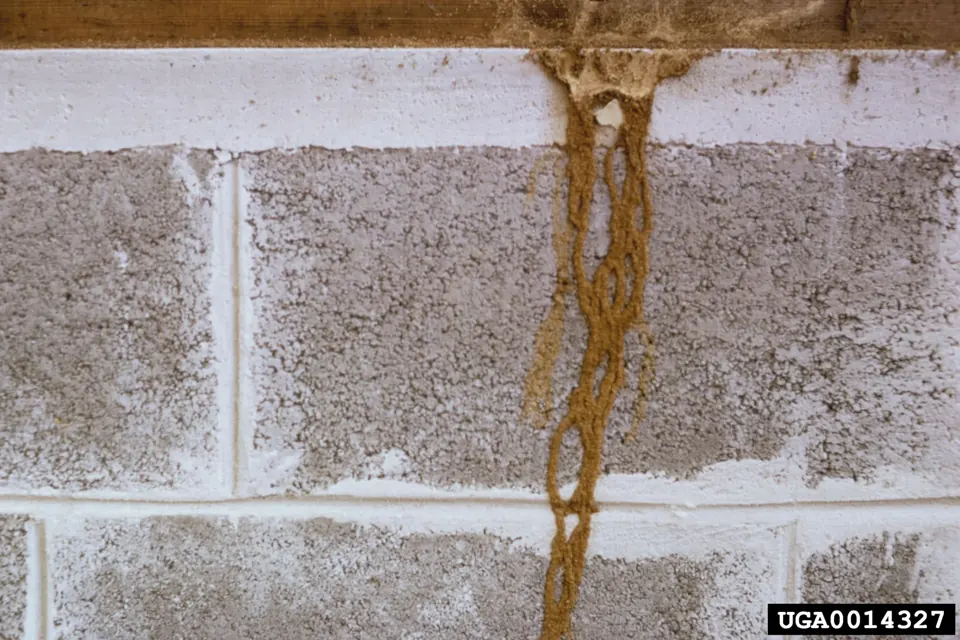
Subterranean termites must protect themselves from drying air 2, so they cross exposed surfaces inside tubes built from soil, wood particles and other materials 5. The tubes are usually about 1/4 to 1/2 inch wide and run between the soil and wood above it 2.
They turn up on outside and inside foundation walls, on crawlspace piers and along plumbing that rises from the soil 1. Tubes higher on the building, on interior walls, ceilings, soffits or fascia boards, usually indicate Formosan termites 1.
A tube is strong evidence, but its activity still has to be tested. Mississippi State recommends breaking a 1-inch section and watching for termites, or for a repair over the next few days 1. An empty tube does not prove the colony has gone, because termites regularly abandon tunnels and rebuild damaged ones 5.
The four tube types that UC IPM describes each say something different about where the colony is and what it is doing 3.
Damaged wood that follows the grain
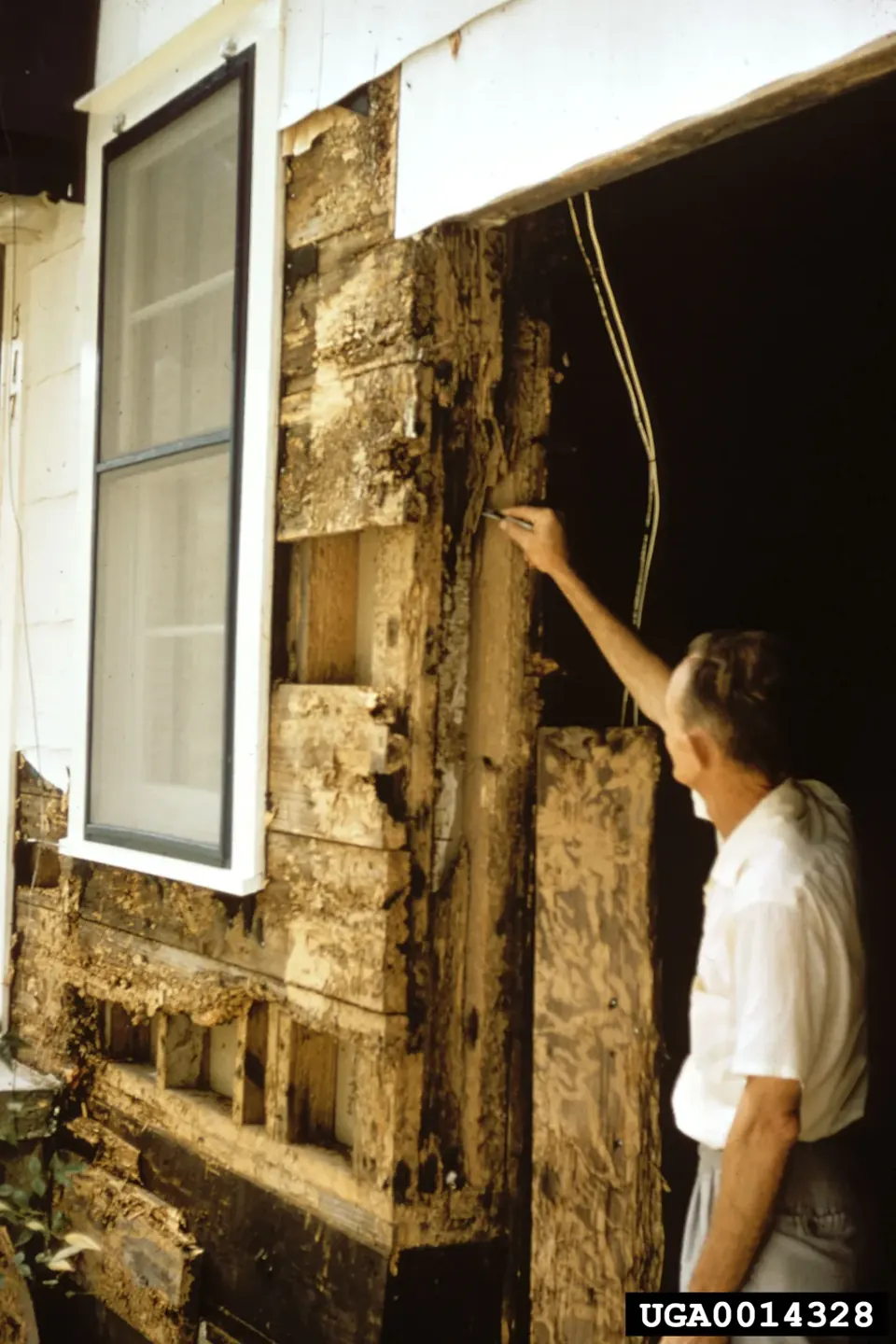
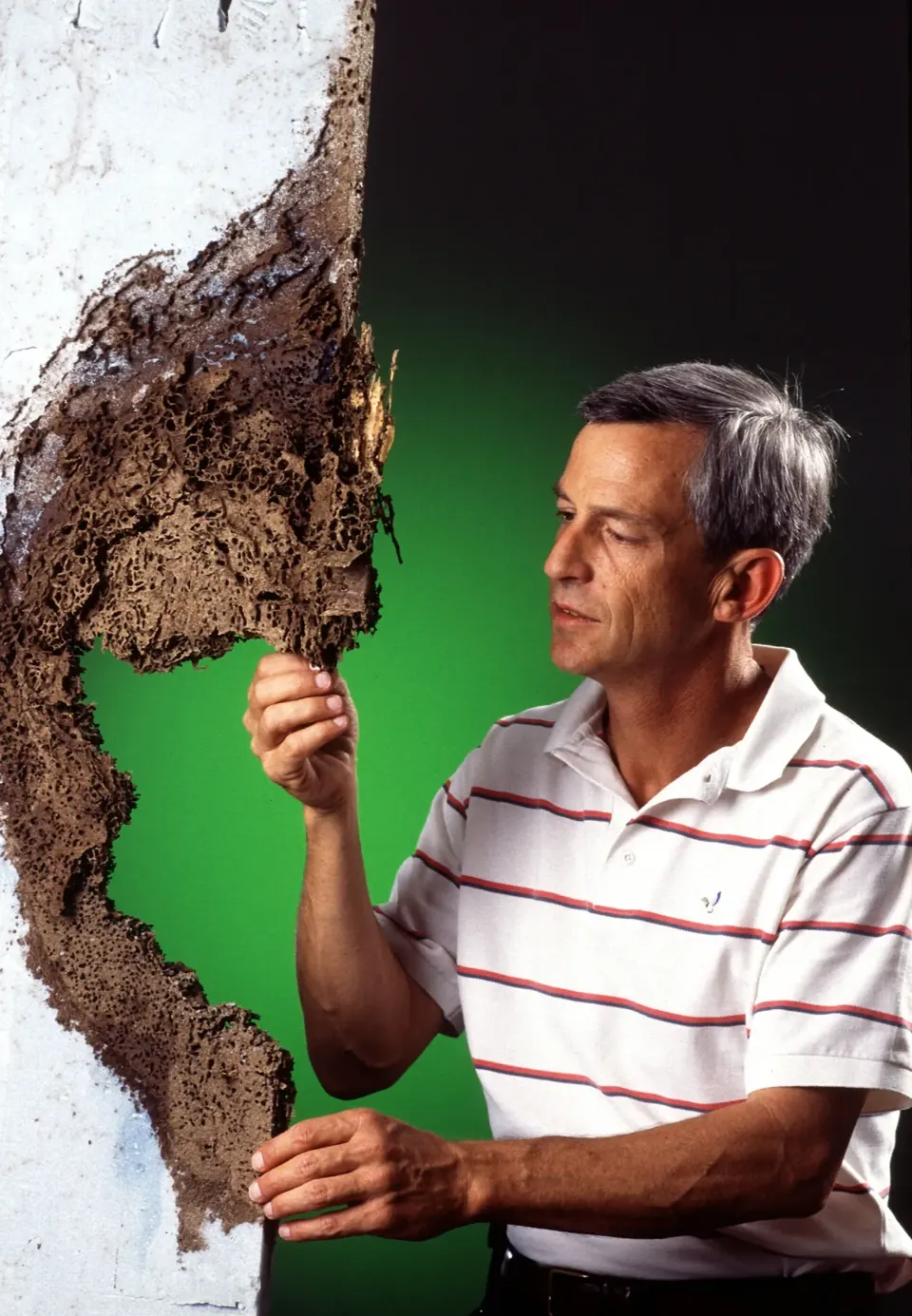
Termite damage often hides behind an intact surface, because workers build their galleries inside the wood to avoid exposure to air 2. Severely damaged wood can sound hollow when tapped. Prodding with a screwdriver is a simple test of whether a suspect board is still sound 2.
Subterranean termites feed along the grain, eating the softer springwood and leaving the harder summerwood in thin layers 3. Their galleries are often speckled with yellow-brown or gray excrement and soil 2. According to UF/IFAS entomologists, badly damaged wood may blister or peel over a paper-thin surface 8.
Indoors, the damage can show on finished surfaces. Narrow, sunken, winding lines in painted drywall can mark galleries in the paper facing, which termites eat while leaving the gypsum alone 1. Painted wood may show small lumps over galleries 9.
A sagging floor or a broken door frame can also come from wood rot. Opening the timber settles it, because dirt-filled galleries mark termite damage 1.
Pellets below tiny holes: the drywood signature
Drywood termites nest above ground in dry wood and do not need soil contact 3. Their range is limited to the Atlantic coast south of Virginia, Florida, the Gulf Coast, the Mexican border and the Pacific Coast to just north of San Francisco 2.
The colony pushes its dry fecal pellets out through kick-out holes, usually 1 to 2 mm across 10. Pellets pile up below the hole, or scatter in a circle when the hole sits high on a wall 10.
Uniform size and six sides set termite droppings apart 1. Up close, each pellet shows longitudinal ridges, unlike the flour-fine powder of powderpost beetles 11 or the shredded fibers that carpenter ants drop 12.
Old pellets can be shaken loose from long-abandoned galleries by movement or vibration 10. UC IPM suggests cleaning up the pellets around a hole and checking a few days later for fresh ones 4.
Pinholes, swarm castles and carton inside walls
BB-sized spots of dried mud on drywall, paneling or a ceiling can be termite "pinholes" 1. They form when workers accidentally open a hole to the outside and plug it with mud against the airflow. Scraping one away and watching for a worker, or for a repair within days, confirms an active infestation 1.
In late spring, odd lumps of dried mud sprouting from walls or ceilings are probably swarm castles that Formosan termites build before swarming 1. The one Mississippi State photographed was about 3 inches wide and stood 1.5 inches off the wall 1.
Formosan termites also build carton nests inside walls, a honeycombed mass of chewed wood, saliva and feces 2. Tubes running over or through spray foam insulation are most often Formosan, although eastern subterranean termites do it too 1.
Which kind of termite left the sign?
The sign usually points to a termite group, which in turn decides which treatments can work 13.
Subterranean termites leave mud tubes, galleries that follow the grain and soil packed into the damage 37. The native species usually swarm in daytime, often in spring after rain 6.
Formosan termites add signs of their own: tubes high on walls, swarm castles and carton in wall voids 12. Their swarmers fly at dusk and gather around lights 14.
Drywood termites leave pellets, kick-out holes and swarmers. Texas A&M describes swarmers as usually the first sign of a drywood infestation and notes that the damage itself is seldom apparent 15.
Dampwood termites live in wet, often decayed wood and dig large open galleries 3. Their pellets are rounded at both ends and lack the clear ridges of drywood pellets 4. Finding them points to a moisture problem in the structure 3.
Room-by-room checklist inside the house
A flashlight, a screwdriver and a phone camera cover every check below. Work room by room and photograph anything you find before touching it.
- Windows, sills and light fixtures. Look for dead swarmers, loose wings and wings stuck in cobwebs 7.
- Kitchens and bathrooms. Check sinks, tubs and the floor around them for dried swarmers 8. Damp wood near sinks, toilets and leaking pipes is a prime location for termites 2.
- Walls and ceilings. Look for sunken winding lines in paint, BB-sized mud spots and lumps of dried mud 1.
- Door and window frames. Doors often sit on expansion joints that let subterranean termites in, which makes frames common access points 13. Tap and probe the lower jambs.
- Floors. Note any sagging, then probe exposed joists and subfloor from below 12.
- Furniture and stored items. Check under wooden furniture for pellet piles, since drywood termites commonly infest it 13. Termites also damage cabinetry, books and stored items 13.
- Attic. Drywood termites more commonly infest soffits and attic areas 13. Check rafters, sheathing and the floor below them for pellets and wings.
- Basement or crawlspace. Check foundation walls, piers, plumbing and sills for tubes 1, then probe the sill plate and joists with a screwdriver 2.
Outside the house: a perimeter walk
Termites enter most buildings through wood close to or in contact with the soil, particularly at porches, steps, terraces and planters 2. A slow walk around the foundation covers those points.
- Foundation and slab edge. Look for tubes along cracks, in corners and where the top of the foundation sits close to the ground 7. Termites can use cracks as small as 0.03 inch (0.8 mm) 2.
- Inspection space. Keep at least 6 inches between the bottom of the siding and the soil or mulch line, so tubes stay visible 13.
- Stucco, siding and brick veneer. Stucco that reaches the soil lets termites travel unseen between it and the foundation 3.
- Porches, steps and trellises. Check any wood that touches the soil and any trellis that connects soil to siding 2.
- Water around the foundation. Note leaks, A/C drain lines and irrigation heads that wet the soil by the walls, and direct them away from the house 13.
- Stumps, woodpiles and landscape timbers. Termites there are normal and rarely threaten a house 25 feet or more away 1. Firewood belongs stacked away from the home 13.
Signs that point away from termites
Three insect groups and one fungus leave evidence that can pass for termite work. Each has one feature that separates it.
Carpenter ants excavate wood without eating it. They leave cone-shaped piles of shredded wood and dead insects below small openings 12. Their galleries are clean and smooth rather than lined with mud 12.
Powderpost beetles leave frass with the consistency of flour or talcum powder and small round exit holes in hardwood 11. Their adults fly to light, so dead beetles collect on windowsills where swarmers would 11.
Brown rot turns wood darker brown, dry and crumbly, with cross-grain cracks that break it into cube-like pieces 16. The decay needs moisture, so it marks a leak or wet soil contact rather than an insect 16.
Elbowed antennae, a pinched waist and front wings longer than the hind pair separate flying ants from termites at a glance 6.
Why a house with no visible signs can still have termites
Soil and wood hide termites, which can also enter through concealed cracks in the foundation 1. Mississippi State notes that a building can pass a thorough inspection and still harbor a hidden infestation 1.
Drywood termites do not build mud tubes, so a house with clean foundation walls can still hold drywood colonies in its framing or furniture 3. Slab-on-ground houses add hidden routes over the slab edge, through expansion joints, around plumbing and through cracks 2.
For that reason extension entomologists recommend routine professional inspections. UC IPM suggests every 3 to 5 years in California 3, while Mississippi State advises annual inspections wherever Formosan termites are known to occur 1. A termite inspection covers the dark and sometimes hazardous places, such as attics and tight crawlspaces, where the telltale signs often hide 3.
What to do after you find a sign
Termites typically work slowly. The USDA Forest Service advises that extreme haste is not required, but treatment should follow within a few months of discovery 2.
- Photograph it. Include a coin or ruler for scale and note the date and location, as LSU AgCenter asks of identification photos 17.
- Test for activity. Break about an inch of mud tube and recheck it after a few days 1. For pellets, sweep them up and look for new ones a few days later 4.
- Collect specimens. Swarmers and soldiers are the castes used for identification, so place several in a sealed vial of rubbing alcohol or hand sanitizer 13. Extension labs offer free termite identification in Florida and Mississippi 1819.
- Book a professional inspection. Mississippi State advises one whenever mud tubes are found, even if no live termites appear 1.
- Match the treatment to the termite group. Soil termiticides and baits work against subterranean termites, not drywood termites 13. Drywood options are spot treatment, wood or furniture replacement and fumigation, while drying the wood usually controls dampwood termites 13.
Questions
What are the first signs of termites?
Swarmers on windowsills or near indoor lights are usually the first sign homeowners notice 7. Shed wings, mud tubes on the foundation and damaged wood are the other signs extension entomologists tell homeowners to check for 7.
Can you have termites without mud tubes?
Yes. Drywood termites live inside dry wood and do not build tubes, so their signs are pellets, kick-out holes and swarmers 310. Subterranean termites can also reach wood through hidden cracks in a slab or foundation 1.
Does finding termite wings mean my house is infested?
Wings on floors or sills mean swarmers emerged inside the building or close to it 2. A swarm indoors usually means an infestation somewhere in the house, so a professional inspection is the next step 5.
Should I break open a termite mud tube?
Yes, a section about an inch long. Termites in the break, or a repair within a few days, confirm the tube is active 1.
How long can termites go unnoticed in a house?
Usually for some time: colonies take several years to grow large enough to swarm, and infestations rarely become evident before they cause visible damage or produce swarmers 1.
Sources
- Mississippi State University Extension Service, Dept. of Entomology. Signs of Termite Infestation. Year not stated. extension.msstate.edu
- Peterson, C., T. L. Wagner, J. E. Mulrooney, and T. G. Shelton. Subterranean Termites: Their Prevention and Control in Buildings. USDA Forest Service, Home and Garden Bulletin 64. Revised October 2006. research.fs.usda.gov
- Lewis, V. R., M. I. Haverty, and A. M. Sutherland. Pest Notes: Subterranean and Other Termites. UC ANR Publication 7415. UC Statewide IPM Program. Updated 05/2014. ipm.ucanr.edu
- Lewis, V. R., A. M. Sutherland, and M. I. Haverty. Pest Notes: Drywood Termites. UC ANR Publication 7440. UC Statewide IPM Program. Updated 08/2014. ipm.ucanr.edu
- Hayes, C. Monitoring and Management of Eastern Subterranean Termites. NC State Extension Publications. Publication date Jan. 22, 2025. content.ces.ncsu.edu
- Crawley, S., and C. C. Hayes. Termite Swarmers: What Do They Mean for You? NC State Extension Publications. Published Dec. 1, 2009; reviewed/revised Feb. 24, 2023. content.ces.ncsu.edu
- Texas A&M University, Urban and Structural Entomology Program. Native Subterranean Termites, Reticulitermes sp. (web page). Year not stated. urbanentomology.tamu.edu
- Chouvenc, T., N.-Y. Su, and R. H. Scheffrahn. Native Subterranean Termites: Reticulitermes flavipes, R. virginicus, R. hageni. UF/IFAS EDIS EENY-212 (IN369). Original May 2004; revised July 2024. doi:10.32473/edis-in369-2001. ask.ifas.ufl.edu
- Basnagala, S., T.-Y. Lee, and K. I. Perry. Eastern Subterranean Termite, Reticulitermes flavipes. Buckeye Yard and Garden onLine (BYGL), Ohio State University. Published May 13, 2024. bygl.osu.edu
- Gordon, J. M., R. H. Scheffrahn, and N.-Y. Su. West Indian Drywood Termite, Cryptotermes brevis. UF/IFAS EDIS EENY-79 (IN236). Original April 1999; revised December 2025. doi:10.32473/EDIS-in236-2020. ask.ifas.ufl.edu
- Lewis, V. R., and S. J. Seybold. Pest Notes: Wood-Boring Beetles in Homes. UC ANR Publication 7418. UC Statewide IPM Program. Updated 06/2010. ipm.ucanr.edu
- Brown, W., and R. E. Gold. Carpenter Ants. Texas AgriLife Extension Service, E-412 (dated 12-11). agrilifeextension.tamu.edu
- Oi, F. M., J. Davis, J. McConnell, J. Corbus, N. Nelson, and M. Atkinson. Termite Prevention and Control. UF/IFAS Extension ENY-2044 (IN1277). Original March 2020; revised December 2023. ask.ifas.ufl.edu
- Sun, Q. Preparing for the Termite Swarms. LSU AgCenter. Published April 20, 2026. www.lsuagcenter.com
- Texas A&M University, Urban and Structural Entomology Program. Drywood Termites (web page). Year not stated. urbanentomology.tamu.edu
- Washington State University, Pestsense. Wood-rotting fungi (fact sheet). Year not stated. pestsense.cahnrs.wsu.edu
- LSU AgCenter, LSU Department of Entomology, and Louisiana State Arthropod Museum. Insect Identification Services. LSU AgCenter Publication 1838. Year not stated. www.lsuagcenter.com
- UF/IFAS Fort Lauderdale Research and Education Center. Send Samples (Termites in Florida). Last modified June 15, 2026. flrec.ifas.ufl.edu
- Mississippi State University Extension Service. Insect Identification Service (termites). Year not stated. extension.msstate.edu