Termite treatment options
How each professional method works and which termite group it fits, drawn from university extension and USDA Forest Service guidance.
The main options for subterranean termites are a liquid soil termiticide or a bait system 1. Drywood termites call for fumigation, heat or a localized spot treatment 2. Soil treatments and baits do nothing against drywood termites 1. Dampwood termites usually need the wet wood dried rather than a pesticide 1.
A well-chosen termite treatment protects a house for years: UF/IFAS gives a liquid soil treatment 2 to 15 or more years of service, and a maintained bait system can protect indefinitely 1.
If an inspector has just left a proposal on the kitchen table, it probably names a method, a contract term and a guarantee you have not seen before.
But one company may quote a trench-and-drill liquid treatment while the next offers bait stations. For drywood termites, the choice can be tenting the whole house or treating a few boards.
So which method fits your termites and your house, and how do you tell a sound proposal from a weak one? We set out how each method works from the published guidance of the University of Florida, UC IPM, NC State, Texas A&M and the USDA Forest Service.
The termite group rules out half the options
Each method attacks termites where they live, so it only works on the groups that live there. The UF/IFAS control summary sorts the methods by group 1:
- Soil termiticides, baits and physical barriers apply to subterranean termites, not to drywood termites or decay fungi.
- Wood replacement works for drywood termites and decay when the problem is localized, not for subterranean termites.
- Fumigation appears in the same bulletin as a drywood method, rated highly effective.
Fumigation, heat, freezing and electrocution devices, in turn, cannot control subterranean termites, because most of the colony nests near or below ground level 3.
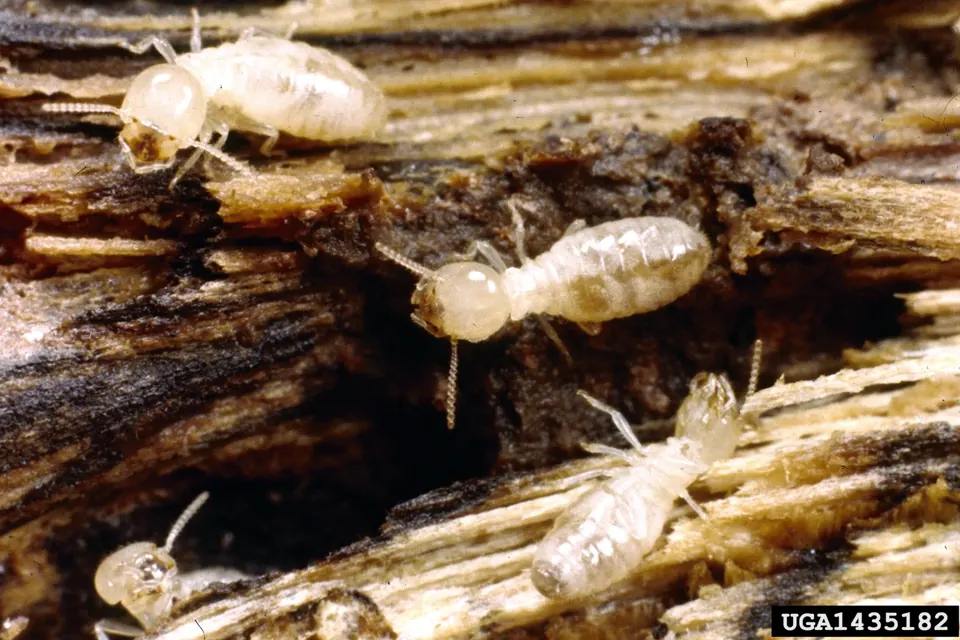
UF termite researchers describe termite treatments as target-specific and often mutually exclusive 4. Confirming the group therefore comes first, either from the evidence that marks each of the types of termites or from a lab specimen.
Dampwood termites sit outside both lists. Drying the infested area is usually enough to control them, with wood replacement and moisture prevention behind it 1.
Liquid soil termiticide: a treated zone the colony cannot cross
Termites die either by contacting the treated soil or by swallowing it while they tunnel, so the treated zone acts as a barrier to a colony foraging into the structure 1.
Subterranean termites enter soil treated with non-repellent termiticides more readily than soil treated with repellent ones 1. In California, UC IPM reports that products with repellent active ingredients, usually pyrethroids, have been phased out. Termites detect them and are repelled before they receive a lethal dose 3.
The non-repellent active ingredients UC IPM names are chlorantraniliprole, fipronil and imidacloprid 3. Depending on the label, they are used as a perimeter barrier or as a local treatment aimed at nests through shelter tubes 3.
A post-construction liquid treatment, as UF/IFAS and NC State describe it, runs in this order:
- The applicator inspects the house to find where termites are entering 1.
- A trench about 6 inches deep and 4 to 6 inches wide is dug along the outside foundation wall. In a crawl space, the inside wall and the soil around piers are trenched too 5.
- Earth-filled porches, walkways, driveways and garage floors that block the trench are drilled so the liquid can be rodded beneath them 5.
- In North Carolina, voids in foundation walls and piers within 4 feet of termite activity are drilled and treated as well 5.
- The treatment must reach down through the soil to the top of the footer 5. Most termiticides go in at 4 gallons per 10 linear feet for each foot of depth 5.
Soil termiticides do not generally kill entire colonies, as some baits can. They provide structural protection when applied properly and maintained 1.
Slab houses are the hard case. Forming an effective barrier in the soil under a slab floor is difficult 6. Interior slabs under finished floors are often waived by the company rather than drilled, so the soil beneath them goes untreated 5.
Two situations change the plan. Near a well, soil with gravel layers or soil that cracks badly in dry weather carries a risk of contaminating the water, and the USDA Forest Service advises other control methods there 6.
Laying pipes or cables through the treated zone later breaks the barrier, so the disturbed soil needs retreatment 6.
Bait systems: termites carry the toxicant home
Bait stations hold wood, paper or another cellulose material 6, combined with a slow-acting insecticide 7. Termites feed one another, so foragers that eat the bait pass it to nestmates that never visit a station 6.
The most effective baits use insect growth regulators, which suppress or destroy the entire colony 3. Chitin-synthesis inhibitors disrupt molting, so a termite that ate the bait dies several weeks later, after it has shared the toxicant 8. UF/IFAS states that termite colonies can be eliminated with baits 1.
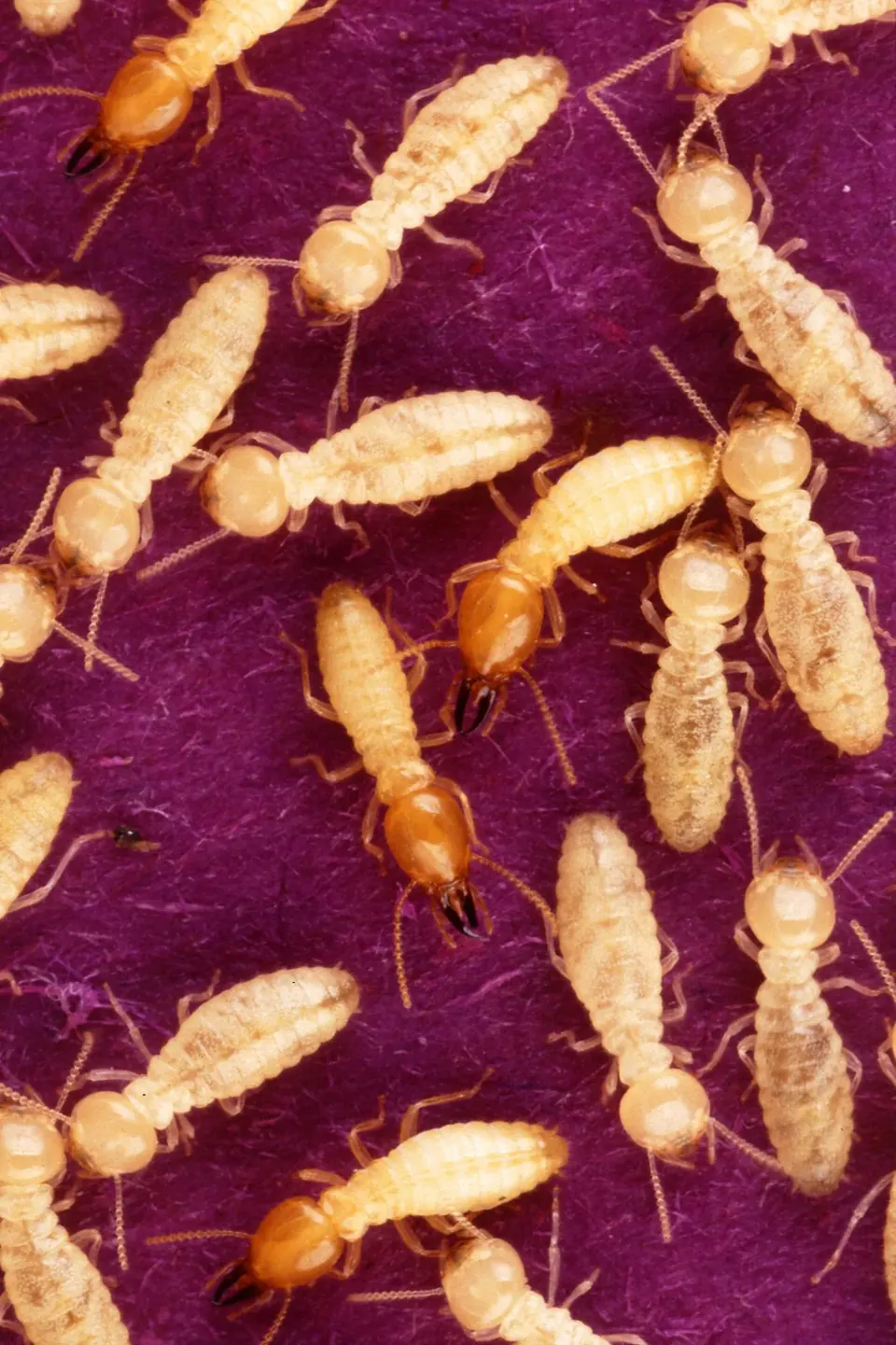
NC State describes the standard layout 5. Stations go in every 10 to 20 feet around the structure, no more than about 2 feet from the foundation, in holes 6 to 12 inches deep. They are checked every 3 to 6 months.
Some companies load the stations with untreated monitoring material until termites appear. Others preload termiticide bait even before any termite evidence is found 5. Above-ground stations can be fixed directly onto areas of termite activity 5.
Baits have clear limits. They act over weeks or months rather than hours, and protection ends the day the contract expires and the bait is removed 6. In-ground stations can take several months to years to work when termites are slow to find them 7.
Preliminary research suggests that baiting Heterotermes takes longer than baiting Reticulitermes or Coptotermes 9. That matters in the desert Southwest and in South Florida, where Heterotermes occurs 9.
Liquid or bait: matching the method to the house
The USDA Forest Service compares the two methods directly and leaves the choice to the homeowner's preferences, since both are popular 6. The conditions below tip the balance:
- A liquid treatment suits owners who want termites killed within hours or days of contact and a single treatment that lasts years without an ongoing contract 6.
- A bait system suits construction that is hard to treat with liquids 1, or a site near a well where the USDA Forest Service advises against treating the soil 6. It uses ounces of active ingredient instead of gallons and disturbs the property less 6.
- Both together suit an active infestation inside the building. Some programs pair a liquid treatment where termites enter with baits that reach the colony 7. The liquid must stay out of the stations, since contamination makes termites avoid them 6.
For Formosan termites, Texas A&M rates baits as potentially highly effective because the termites feed aggressively 7. Above-ground baits placed against active tubes reach them faster than in-ground stations 7.
Fumigation: the whole-house reset for drywood termites
The house is tented and sealed to hold the fumigant, sulfuryl fluoride 1. UF/IFAS calls fumigation highly effective, a "reset button" that kills drywood termites throughout the structure 1.
A monitored fumigation, with gas monitoring lines installed inside the building, has the highest rate of success 2. A nonmonitored fumigation may not reach a lethal gas concentration, which can lead to failures 2.
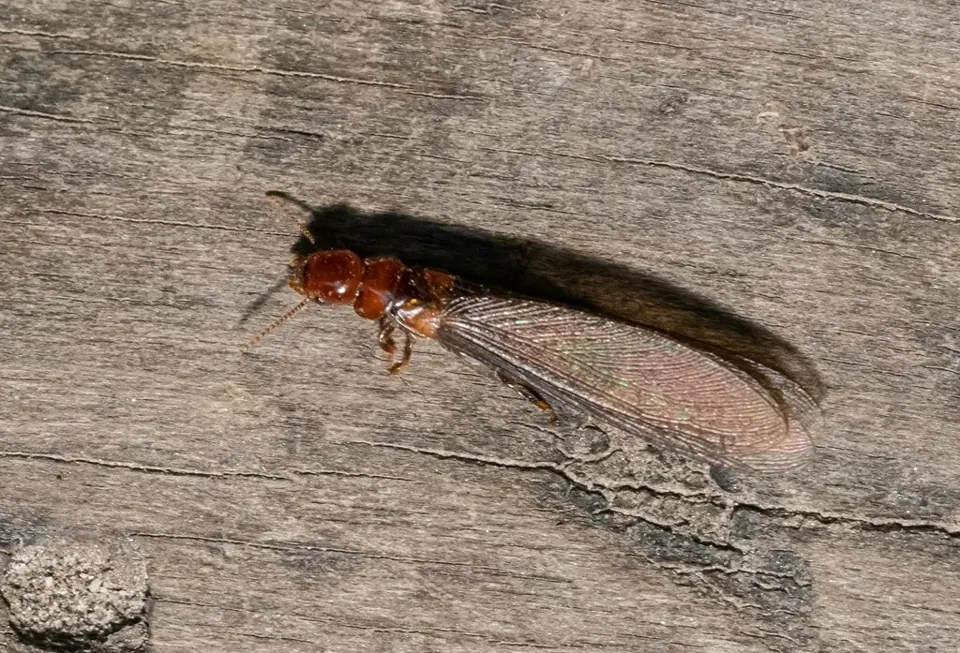
The practical costs are time and disruption. Occupants, pets and plants leave for several days while the house is fumigated and aerated 2. Tarpaulins dragged across a roof can damage it 2.
The gas leaves no residue, so it gives no protection against a later infestation 2. Fumigation is heavily regulated and uses restricted-use products. California and Florida do the most fumigations in the country 1.
Texas A&M uses fumigation against Formosan termites only after a soil barrier is in place, entry points are treated and carton nest material is removed 7. Because the gas leaves nothing behind, the soil barrier is what stops termites re-entering from the ground 7.
Heat: a whole-structure treatment measured in hours
Heat treatment raises all infested wood to at least 120°F and holds it there for at least 33 minutes 2. The method uses no chemicals and empties the house for hours instead of days 2.
Portions of a large building can be treated one at a time, which suits apartments and condominiums 2.
The drawbacks are physical. Large beams can take many hours or days to heat at the core, and wood on concrete or tile acts as a heat sink that is hard to bring to temperature 2. Heat can also damage plastics such as outlet covers, along with cable wiring, and like fumigation it leaves no residual protection 2.
Spot treatments: precise when the colony is found
A localized treatment covers a single board or a small group of boards 2. For drywood termites, UF/IFAS describes the common drill-and-treat method: holes are drilled into infested wood and insecticide is injected into the hollow galleries 10.
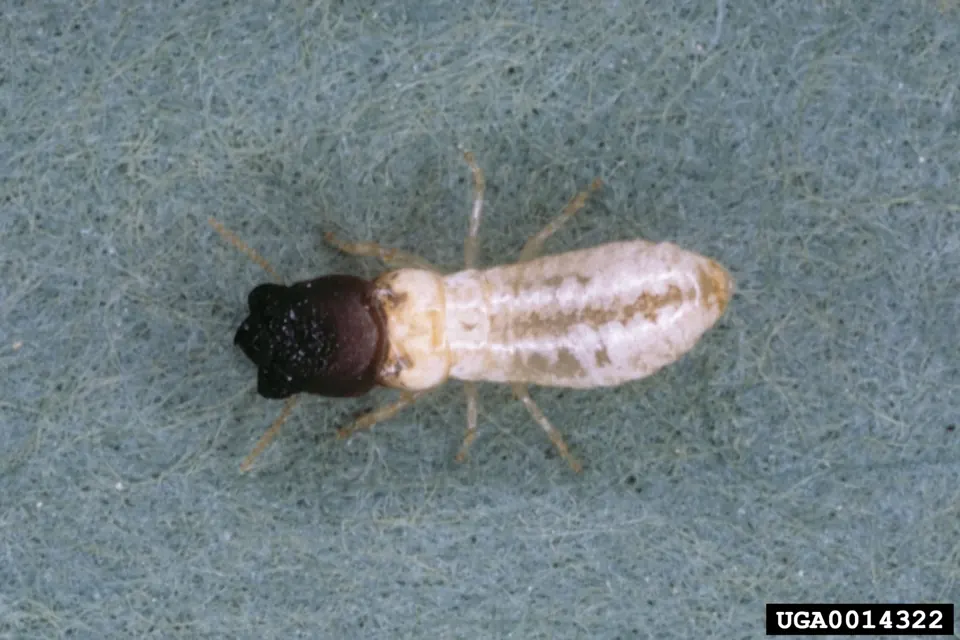
Nonchemical spot options include localized heat, microwaves and high-voltage electrocution 2. Wood replacement is another, though a load-bearing member may need an engineer or contractor and a building permit 2.
Every one of these depends on finding the colony. Research summarized by UC IPM shows high control when the colony is located correctly and the treatment reaches the termites directly, while home-use products are not effective 2. Botanical products such as orange oil have also been tried, but lab and field tests at two universities question the efficacy of at least one, d-limonene 2.
After a drywood treatment, removing every pellet and wing creates a simple monitor. New, growing piles of pellets or fresh wings usually mean the treatment failed 10.
Subterranean spot treatments carry more risk. The area where termites were found may not be the colony, and outside an existing contract the guarantee is often very limited or absent 5. Texas A&M adds that spot treatments under 10 square feet or 10 linear feet may not stop Formosan termites from entering elsewhere 7.
Wood treatments and barriers are mostly for new construction
Borate products, usually disodium octaborate tetrahydrate, protect wood against termites and decay fungi 1. Borate treatment for termites is usually done during construction, with framing sprayed to a minimum height of 2 feet 1.
Framing added after the borate application stays untreated unless the builder calls the applicator back 1. Conehead termites do not respond to borates, so borate is not a recommended stand-alone treatment where they occur 1.
Borates also have a remedial role against dampwood termites, because moisture in the infested wood helps the product penetrate 1.
Physical barriers of stainless steel mesh or plastic go under the slab before the concrete is poured 6. Metal termite shields on foundations make tubes easier to see but do not provide effective protection on their own 6. The USDA Forest Service calls construction the best and least expensive time to protect a building 6.
Questions to ask before you sign
Each method has its own weak points, so the questions differ by method:
- Liquid treatment: Which areas will be waived, such as finished slab floors, and why 5?
- Bait system: How often are stations checked, and what happens if termites reach the house anyway 5?
- Fumigation: Will the fumigation be monitored with gas lines inside the structure 2?
- Spot treatment: How was the colony located, and what does the guarantee cover 25?
- Any contract: Are Formosan or Asian subterranean termites excluded from the warranty 1?
- Any chemical: Can you see the Safety Data Sheets for the products, or equivalent information for nonchemical methods 2?
UC IPM also advises reading the guarantee carefully and considering an annual inspection service after drywood treatment 2. Keeping every termite inspection report matters as well, because damage cannot be dated without an earlier reference point 5.
Questions
Which is better, liquid termite treatment or bait?
Neither wins in every house. Liquid termiticides kill termites within hours or days and need no ongoing contract 6. Baits use ounces of active ingredient instead of gallons and can eliminate the colony, but they work over weeks or months 61.
Can you use liquid termite treatment and bait together?
Yes. Baits may be used alone or with a liquid treatment, provided the liquid does not contaminate the monitoring stations, which can make termites avoid them 6.
How long does termite treatment last?
UF/IFAS gives soil termiticides 2 to 15 or more years and bait systems 4 to 7 or more years, or indefinitely while the system is maintained 1. Fumigation and heat leave no residue, so they give no lasting protection on their own 2.
Sources
- Oi, F. M., J. Davis, J. McConnell, J. Corbus, N. Nelson, and M. Atkinson. Termite Prevention and Control. UF/IFAS Extension ENY-2044 (IN1277). Original March 2020; revised December 2023. ask.ifas.ufl.edu
- Lewis, V. R., A. M. Sutherland, and M. I. Haverty. Pest Notes: Drywood Termites. UC ANR Publication 7440. UC Statewide IPM Program. Updated 08/2014. ipm.ucanr.edu
- Lewis, V. R., M. I. Haverty, and A. M. Sutherland. Pest Notes: Subterranean and Other Termites. UC ANR Publication 7415. UC Statewide IPM Program. Updated 05/2014. ipm.ucanr.edu
- Chouvenc, T., R. H. Scheffrahn, and L. Buss. Termite Species Distribution in Florida and UF Termite Identification Services. UF/IFAS EDIS ENY-2079 (IN1360). Original May 2022; reviewed February 2025. doi:10.32473/edis-IN1360-2022. ask.ifas.ufl.edu
- Hayes, C. Monitoring and Management of Eastern Subterranean Termites. NC State Extension Publications. Publication date Jan. 22, 2025. content.ces.ncsu.edu
- Peterson, C., T. L. Wagner, J. E. Mulrooney, and T. G. Shelton. Subterranean Termites: Their Prevention and Control in Buildings. USDA Forest Service, Home and Garden Bulletin 64. Revised October 2006. research.fs.usda.gov
- Gold, R. E., M. Keck, E. Brown, and K. Schofield. Formosan Subterranean Termites. Texas AgriLife Extension Service, E-367 (dated 9/10). extensionentomology.tamu.edu
- Su, N.-Y., R. H. Scheffrahn, J. Gordon, and T. Chouvenc. Formosan Subterranean Termite, Coptotermes formosanus. UF/IFAS EDIS EENY121 (IN278). Original January 2000; revised September 2025. ask.ifas.ufl.edu
- Scheffrahn, R. H., and N.-Y. Su. West Indian Subterranean Termite, Heterotermes sp. UF/IFAS EDIS EENY127 (IN284). Original April 2000; revised December 2005; reviewed February 2021. ask.ifas.ufl.edu
- Gordon, J. M., R. H. Scheffrahn, and N.-Y. Su. West Indian Drywood Termite, Cryptotermes brevis. UF/IFAS EDIS EENY-79 (IN236). Original April 1999; revised December 2025. doi:10.32473/EDIS-in236-2020. ask.ifas.ufl.edu