What termite damage looks like
Subterranean and drywood damage compared with wood rot, carpenter ants and beetles, plus the probe-and-tap test and what repair involves.
Subterranean termite damage runs along the grain: the soft springwood is eaten out, leaving thin layers of harder wood flecked with soil and gray-brown excrement 12. Drywood damage cuts across the grain in smooth chambers that hold six-sided pellets 3. Wood rot cracks into cubes or turns spongy, with no soil in the cavities 45.
Outdoors, termites break down dead and dying plant material and are an important part of the nutrient cycle 2. Inside a house the same feeding is expensive. The USDA Forest Service cites common estimates of $1 billion a year in US termite damage, with some as high as $7 billion 2.
The damage is also hard to see. Workers build their galleries inside the wood to stay out of the air, so the surface often looks normal 2.
Maybe a screwdriver sank into a baseboard during a repair, or the paint on a door frame bubbled for no obvious reason.
But soft, crumbling wood has several possible causes: termites, carpenter ants, wood-boring beetles and plain rot. Each needs a different fix. So is this termite damage, and is it still happening?
We compared damage descriptions from extension entomologists and wood-decay specialists in ten states.
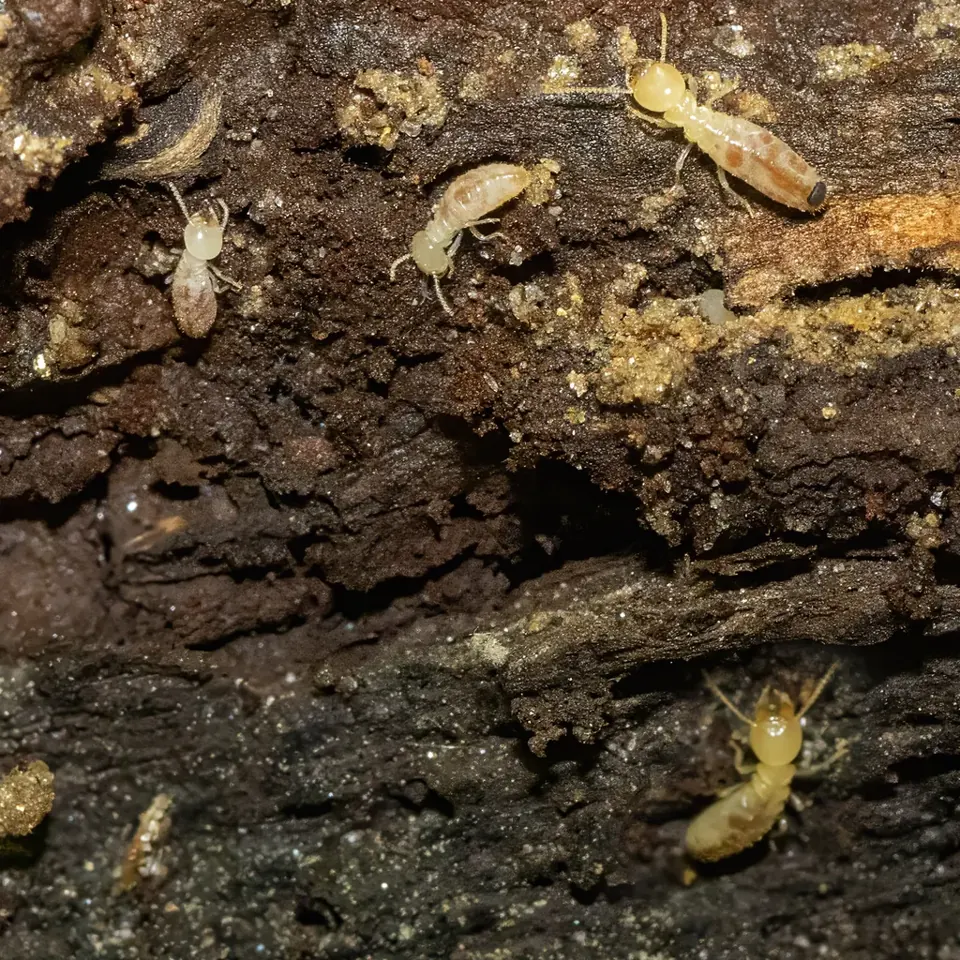
Subterranean termite damage: layers along the grain, packed with soil
Subterranean termites feed along the grain. They eat the softer springwood and leave the harder, less digestible summerwood standing in thin layers 1. UC IPM notes that this pattern alone can often separate subterranean termite work from that of other species 1.
The galleries hold soil. The USDA Forest Service describes them as often covered with yellow-brown or gray specks of excrement and soil 2. Texas A&M adds that tunnels may be lined with mud or look pale and spotted from fecal material plastered on their walls 6.
From outside, the wood can look almost sound. Ohio State notes that the outer layer may stay intact even over heavy damage 7. UF/IFAS describes severely damaged surfaces that blister or peel over a paper-thin shell 8, while NC State lists a thin, gritty, gray-brown film as another sign 9.
In the worst cases termites honeycomb whole timbers, leaving little more than a wooden shell 2.
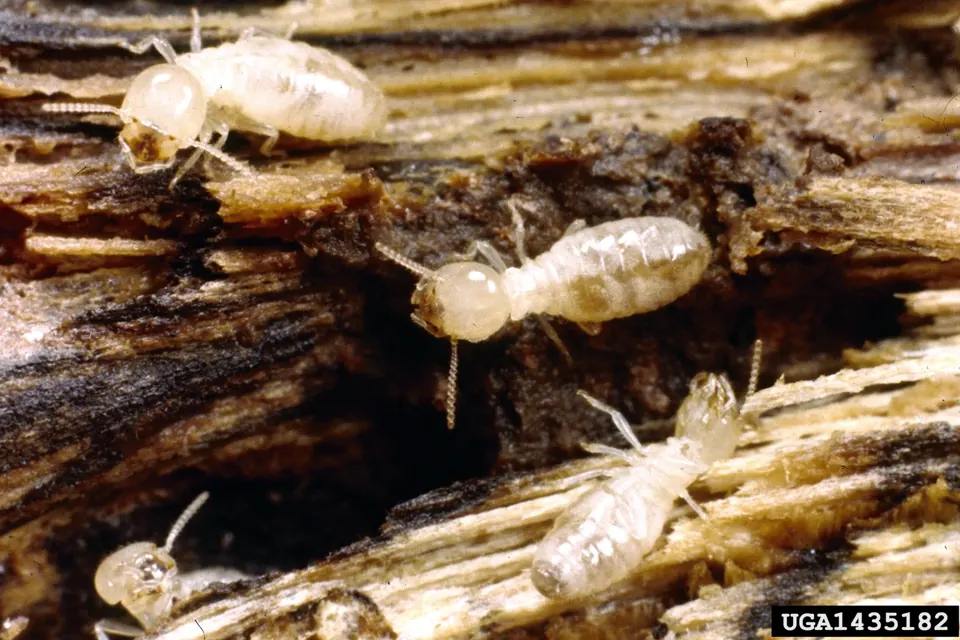
Formosan termites eat both springwood and summerwood 3. Where moisture allows, they also build aerial nests of carton, a mix of fecal material and cellulose, inside wall spaces 10.
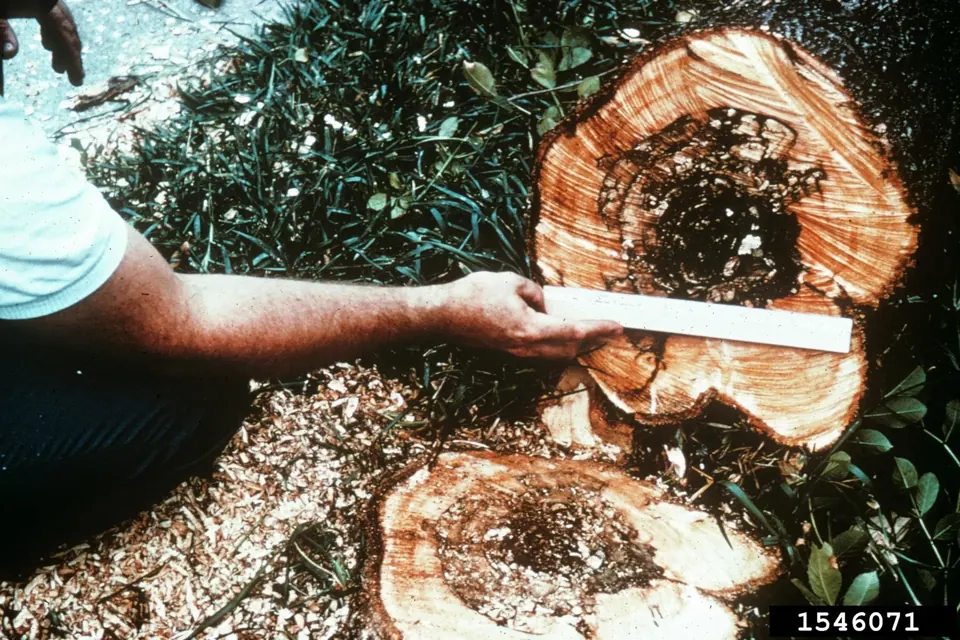
Drywood termite damage: smooth chambers across the grain
Drywood termites leave a different pattern. They cut across the grain in any direction and eat summerwood as readily as springwood, leaving smooth, sculptured galleries 311.
Some chambers fill with fecal pellets 1. That makes the gallery contents a quick separator: soil means subterranean termites, while loose six-sided pellets mean drywood termites 3.
Texas A&M notes that drywood damage is seldom apparent from outside 3. When it does show, it tends to be blistering or peeling of thin surface wood or paint 12. The West Indian drywood termite appears to prefer sapwood 12.
Drywood termites commonly infest furniture as well as structural wood 13. Piles of termite droppings below the infested wood may be the first clue to their presence 1.
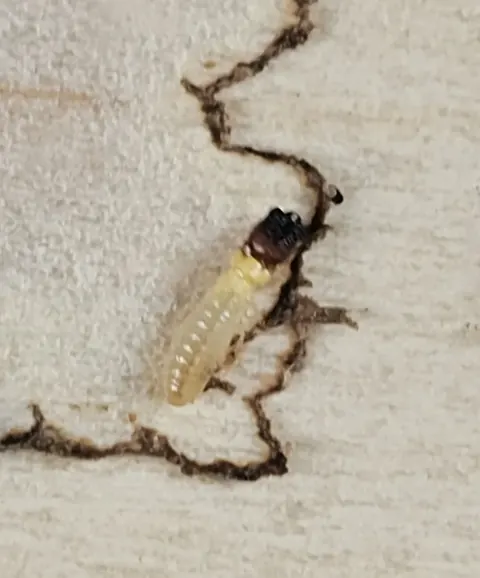
What damage looks like on walls, floors and door frames
Termites eat almost anything made of cellulose. NC State lists wood paneling, paper, cardboard boxes, art canvases, the paper covering of sheetrock and wooden picture frames 9. While foraging they also tunnel through plastic, foam board and spray foam they cannot digest 9.
Drywall. Narrow, sunken, winding lines or sunken areas in paint or wallpaper can mark galleries just beneath the surface 5. Termites eat the cardboard facing of the drywall but not the gypsum, usually leaving the thin coat of paint undisturbed 5.
Pinholes. BB-sized spots of dried mud on a wall or ceiling are termite pinholes, small breaches the workers have sealed 5.
Door frames. UF/IFAS identifies door frames as common access points, because doors often sit on expansion joints that let subterranean termites find their way in 13.
Floors and framing. A sagging floor or roof, or a broken door frame, can come from termites or from rot 5. Damaged timbers whose galleries contain dried dirt are termite damage 5.
Damage often surfaces during other work, such as a remodel 1. Mississippi State describes homeowners who found a serious infestation only when they stripped old wallpaper 5.
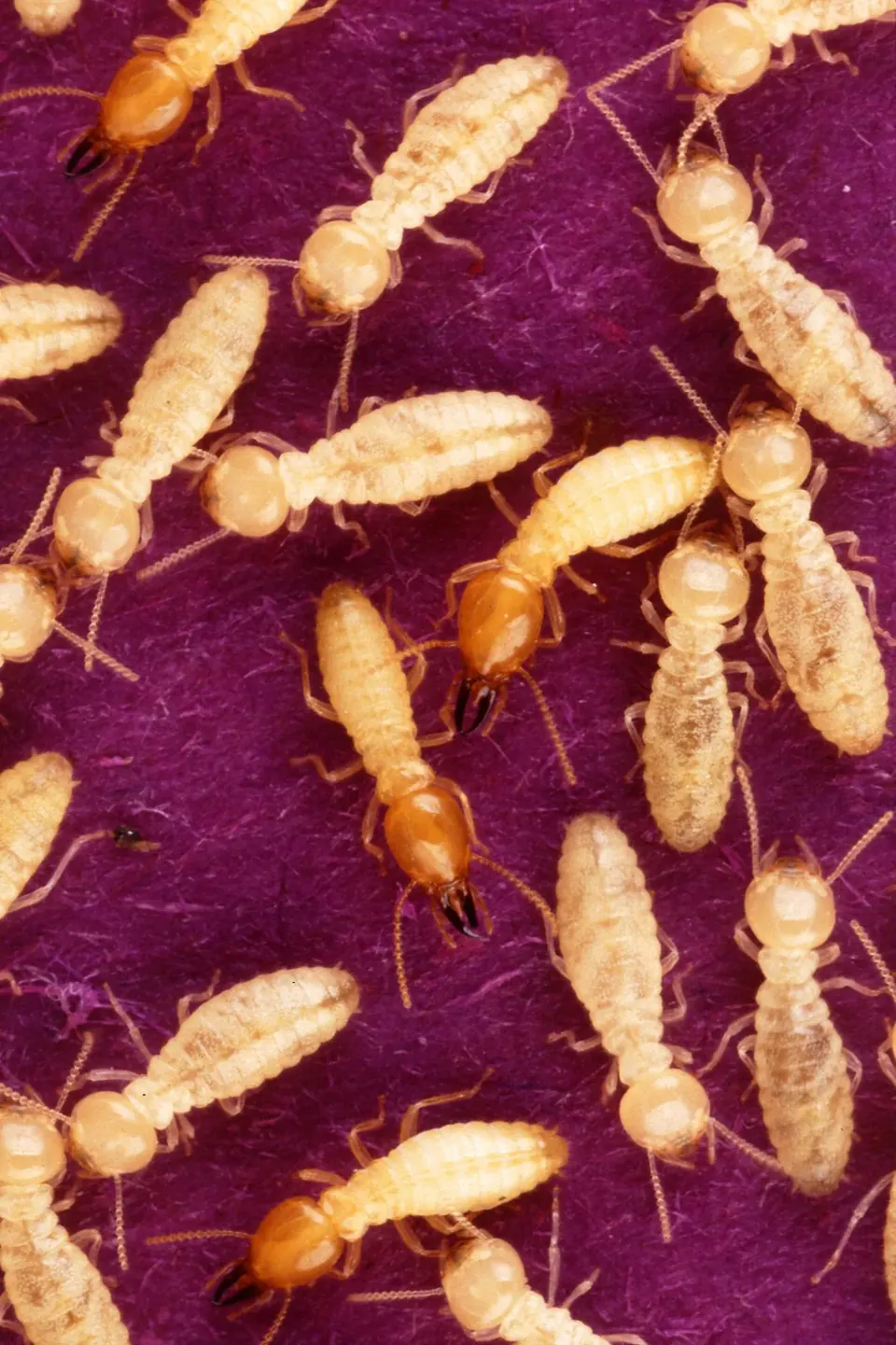
Termite damage, water damage or wood rot?
Rot and termite damage overlap, because both follow moisture. Decay fungi need water in the wood; most do poorly below about 30 percent moisture content 14.
Brown rot leaves wood brownish or reddish. When dry, it cracks across and along the grain into small cube-shaped pieces 14. Washington State describes advanced brown rot as a dry, fragile, crumbly mass, more common in softwoods such as fir, hemlock and pine 4. It is sometimes wrongly called dry rot, although moisture is required 4.
White rot, most common in hardwoods, looks bleached, whitish and spongy or stringy 4. Soft rot attacks from the surface inward where wood is frequently wetted 4. Mold and stain fungi mark excess moisture without causing much structural damage 4.
The deciding features are pattern and contents. Rot breaks wood into cubes or stringy fibers rather than tunnels 4. Termite damage forms galleries along the grain that hold soil or dried mud 56. Texas A&M acknowledges that fungal decay can be confused with termite damage, which is why the contents of the cavity matter 6.
Often the two occur together. Subterranean termites prefer decayed wood and eat it faster than sound wood 1. Dampwood termites and moisture ants also attack rotting wood 4, so dampwood termites in a structure signal a moisture problem as much as an insect one 1.
Carpenter ant and beetle damage
Other wood pests make their tunnels differently. The USDA Forest Service notes that their tunnels usually cut across the grain and turn wood into compressed pellets, powder or shredded fibers 2.
Carpenter ants also follow the grain and excavate springwood, but their galleries are clean and smooth rather than lined with mud 15. They nest in wood that is moist, rotten or already damaged by termites 15. Cone-shaped piles of shredded wood and dead insects build up below their openings 15.
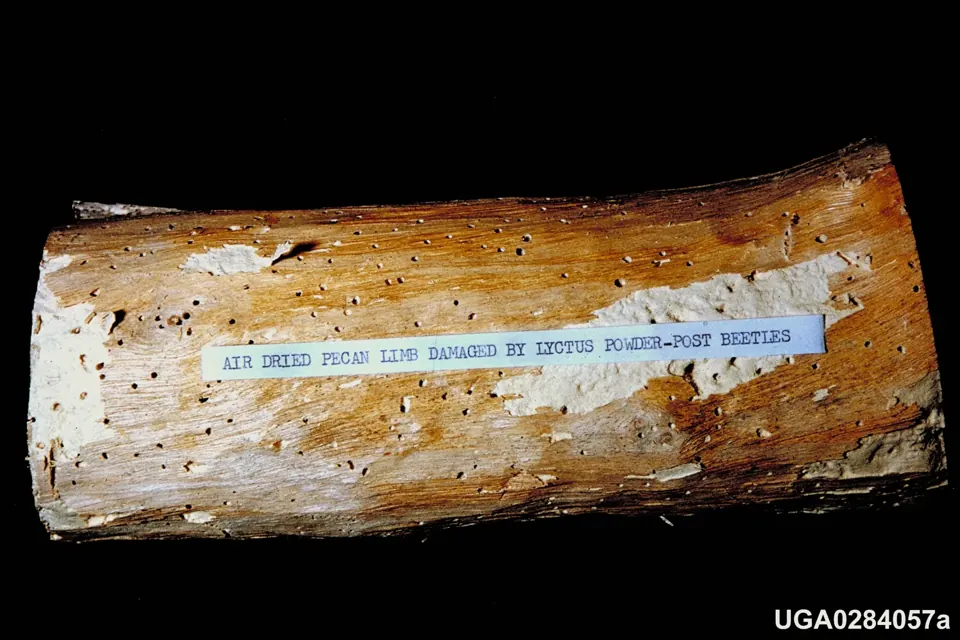
Wood-boring beetles leave round exit holes and frass that ranges from talc-fine powder to gritty pellets 16. True powderpost beetle damage starts along the grain and can later reduce the whole sapwood to powder 17. These beetles attack hardwoods such as oak, ash and hickory, so flooring, paneling and furniture are typical targets 16.
Deathwatch beetles prefer wood above 14 percent moisture, which makes them a pest of damp crawlspaces, basements and outbuildings 16. A ballpoint pen tip in the exit hole separates the beetle groups by hole size 16.
Probing and tapping: testing a suspect board yourself
A screwdriver and a flashlight are enough for this check. Work along sills, joists, door frames, porch steps and any wood near leaks or touching soil, the places termites most often enter 213.
- Tap it. Strike the wood with the handle of a screwdriver. Wood that sounds hollow may be damaged inside 92.
- Probe it. Push the blade or a knife into the surface. Damaged wood is soft and thin at the surface and punctures easily 91.
- Read the surface. Look for darkening or blistering 1, a gritty gray-brown film 9 or lumps in the paint 7.
- Open a small spot. The surface has to be stripped away to see the extent of damage 2. Soil or dried mud in the galleries means subterranean termites 5; pellets mean drywood termites 3; clean galleries with sawdust piles nearby point to carpenter ants 15.
- Check moisture. Ohio State recommends a moisture meter, because infested areas read high when termites carry water into them 7.
- Watch for live insects. Live termites in the wood are a sure sign of an active infestation 1. They move away quickly after a disturbance, so look as soon as the wood is opened 5.
Attics and crawlspaces with nails, dust or standing water are hazardous. UC IPM recommends leaving those to a licensed inspector 1.
Is the damage old or still active?
NC State is blunt that no accurate method exists for dating recently found damage 9. It takes a reference point, a time when the wood was known to be sound, which is why annual inspection records matter 9.
Dried mud in galleries without live termites may be old damage from an infestation already controlled 5. Live termites settle the question 1. For subterranean termites, a nearby mud tube can be tested by breaking an inch and checking for repair 5. For drywood termites, sweeping up pellets and looking for fresh ones a few days later does the same job 18.
How fast termites cause damage, and how serious it gets
Termites typically work slowly. With proper inspection, the USDA Forest Service expects little damage before discovery and control, well before timbers lose strength 2. It advises treatment within a few months rather than in haste 2.
The pace depends on the colony: larger termites and larger colonies eat more wood 1. A subterranean colony more than 5 or 6 years old may hold several thousand to over a million termites 2. One North Carolina study found up to 25 native subterranean colonies per acre 13.
Formosan termites are a bigger threat: they are larger, feed more quickly and form larger colonies than native species 2. UF/IFAS cites studies in which single Formosan colonies covered 1 to 1.5 acres 13.
Repairing termite-damaged wood
Repair and treatment are separate jobs. Heavily damaged, structurally weakened sills, joists and flooring should be replaced with sound wood 2. UC IPM notes that homeowners can replace damaged wood and correct conducive conditions themselves, while pesticide applications require a licensed professional 1.
For load-bearing wood, UC IPM advises consulting an architect, engineer or general contractor, noting that building permits may be needed 18.
Wood replacement on its own does not remove the colony. For drywood termites it counts as a localized treatment, and its success depends on how accurately the infestation has been mapped 18. Subterranean termites are controlled with a soil termiticide or a bait system 13.
The USDA Forest Service adds steps that keep repairs from being reinfested 2:
- remove wood, form boards and cellulose debris from under and beside the building;
- remove trellises and other wooden structures that connect soil to the house;
- keep soil at least 18 inches below floor joists and 12 inches below girders where possible;
- fill cracks and voids in concrete or masonry, and fix drainage and ventilation.
A termite inspection sets the scope before repairs start. The treatment options then depend on which termite did the damage 13.
Questions
Does termite damage sound hollow?
Severely damaged wood often does. Tapping it with a screwdriver handle gives a hollow sound, while the blade pushes easily into soft spots 92.
What does termite damage look like on drywall?
Narrow, sunken, winding lines or sunken patches under the paint. Termites eat the paper facing of drywall but not the gypsum, usually leaving the paint layer intact 5.
How fast do termites cause damage?
Termites typically work slowly, and regular inspection usually finds them before timbers lose strength 2. Formosan termites feed more quickly than native species 2.
Sources
- Lewis, V. R., M. I. Haverty, and A. M. Sutherland. Pest Notes: Subterranean and Other Termites. UC ANR Publication 7415. UC Statewide IPM Program. Updated 05/2014. ipm.ucanr.edu
- Peterson, C., T. L. Wagner, J. E. Mulrooney, and T. G. Shelton. Subterranean Termites: Their Prevention and Control in Buildings. USDA Forest Service, Home and Garden Bulletin 64. Revised October 2006. research.fs.usda.gov
- Texas A&M University, Urban and Structural Entomology Program. Drywood Termites (web page). Year not stated. urbanentomology.tamu.edu
- Washington State University, Pestsense. Wood-rotting fungi (fact sheet). Year not stated. pestsense.cahnrs.wsu.edu
- Mississippi State University Extension Service, Dept. of Entomology. Signs of Termite Infestation. Year not stated. extension.msstate.edu
- Texas A&M University, Urban and Structural Entomology Program. Native Subterranean Termites, Reticulitermes sp. (web page). Year not stated. urbanentomology.tamu.edu
- Basnagala, S., T.-Y. Lee, and K. I. Perry. Eastern Subterranean Termite, Reticulitermes flavipes. Buckeye Yard and Garden onLine (BYGL), Ohio State University. Published May 13, 2024. bygl.osu.edu
- Chouvenc, T., N.-Y. Su, and R. H. Scheffrahn. Native Subterranean Termites: Reticulitermes flavipes, R. virginicus, R. hageni. UF/IFAS EDIS EENY-212 (IN369). Original May 2004; revised July 2024. doi:10.32473/edis-in369-2001. ask.ifas.ufl.edu
- Hayes, C. Monitoring and Management of Eastern Subterranean Termites. NC State Extension Publications. Publication date Jan. 22, 2025. content.ces.ncsu.edu
- Gold, R. E., M. Keck, E. Brown, and K. Schofield. Formosan Subterranean Termites. Texas AgriLife Extension Service, E-367 (dated 9/10). extensionentomology.tamu.edu
- University of Hawaii, CTAHR Termite Project. Drywood Termites vs. Subterranean Termites (public handout, PDF). Year not stated. www3.ctahr.hawaii.edu
- Gordon, J. M., R. H. Scheffrahn, and N.-Y. Su. West Indian Drywood Termite, Cryptotermes brevis. UF/IFAS EDIS EENY-79 (IN236). Original April 1999; revised December 2025. doi:10.32473/EDIS-in236-2020. ask.ifas.ufl.edu
- Oi, F. M., J. Davis, J. McConnell, J. Corbus, N. Nelson, and M. Atkinson. Termite Prevention and Control. UF/IFAS Extension ENY-2044 (IN1277). Original March 2020; revised December 2023. ask.ifas.ufl.edu
- Weikert, S. Brown Rot in Wood. Penn State Extension. Updated August 20, 2026. extension.psu.edu
- Brown, W., and R. E. Gold. Carpenter Ants. Texas AgriLife Extension Service, E-412 (dated 12-11). agrilifeextension.tamu.edu
- Lewis, V. R., and S. J. Seybold. Pest Notes: Wood-Boring Beetles in Homes. UC ANR Publication 7418. UC Statewide IPM Program. Updated 06/2010. ipm.ucanr.edu
- Houseman, R. M. (reviser). Wood-Boring Beetles. University of Missouri Extension G7422. Reviewed June 2010 and September 2017. extension.missouri.edu
- Lewis, V. R., A. M. Sutherland, and M. I. Haverty. Pest Notes: Drywood Termites. UC ANR Publication 7440. UC Statewide IPM Program. Updated 08/2014. ipm.ucanr.edu